
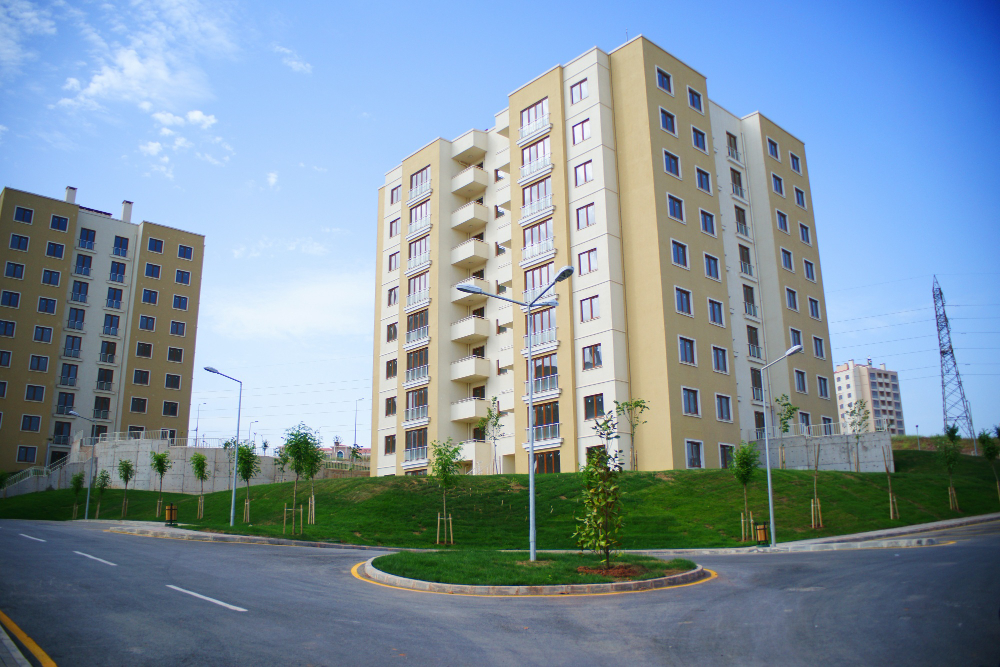
Condos and townhouses can look a lot alike. Both often share walls with neighbors, and both usually come with a homeowners association (HOA). But when it comes to condo vs townhouse, the real difference is what you own.
- With a condo, you own the space inside your unit, plus a shared interest in the rest of the property.
- With a townhouse, you usually own the home itself and the land under it.
In California, there is one more twist. The look of the building does not decide which one it is. The legal setup does. Below, we explain how each one works, what they cost, and what to check before you buy in Bakersfield.
What Is a Condo?
A condo (short for condominium) is a way of owning property, not a type of building. Under California law, a condo owner holds two things:
- A unit: the space inside your walls, floor and ceiling.
- A shared interest in the common areas: hallways, roofs, parking lots, pools and grounds, owned together with the other owners.
For example, say you buy a second-floor unit in a three-story building. You own everything inside your unit, like the flooring, cabinets and appliances. The roof, the stairs and the pool belong to all the owners together. The HOA takes care of them with the monthly dues everyone pays.
Condos can be in large buildings, small two-story complexes, or even rows of homes that look exactly like townhouses.
What Is a Townhouse?
A townhouse is a style of home. It is usually two or more stories tall and shares one or both side walls with the homes next door. No one lives above or below you.
In California, townhouse communities are often set up as “planned developments.” That means:
- You own your home and the lot it sits on. Sometimes the lot is only the ground under the home, with no yard.
- You share common areas like walkways, green spaces or a pool with the other owners, through the HOA.
For example, in a row of six townhouses, you might own your two-story home, your small back patio and the ground under both. The HOA looks after the shared landscaping and the community pool.
Condo vs Townhouse at a Glance
Here is the difference between a condo and a townhouse, side by side.
| Condo | Townhouse | |
|---|---|---|
| What you own | The space inside your unit, plus a shared interest in common areas | Usually the home and the land under it |
| Neighbors | Can be above, below and beside you | Beside you only |
| Outdoor space | Usually a balcony, or shared grounds only | Often a small yard or patio of your own |
| What the HOA takes care of | Usually the roof, exterior, grounds and building insurance | Usually only shared areas, like walkways and amenities |
| HOA dues | Often higher, because they cover more | Often lower, because they cover less |
| Insurance you buy | A condo policy (HO-6) | A standard homeowners policy |
| Getting a loan | The lender may review the whole condo community | Usually financed like a single-family home |
| Freedom to make changes | Limited, especially outside your unit | More freedom, though HOA rules still apply |
These are the usual patterns. Each community’s own rules decide the details, so always read them before you buy.
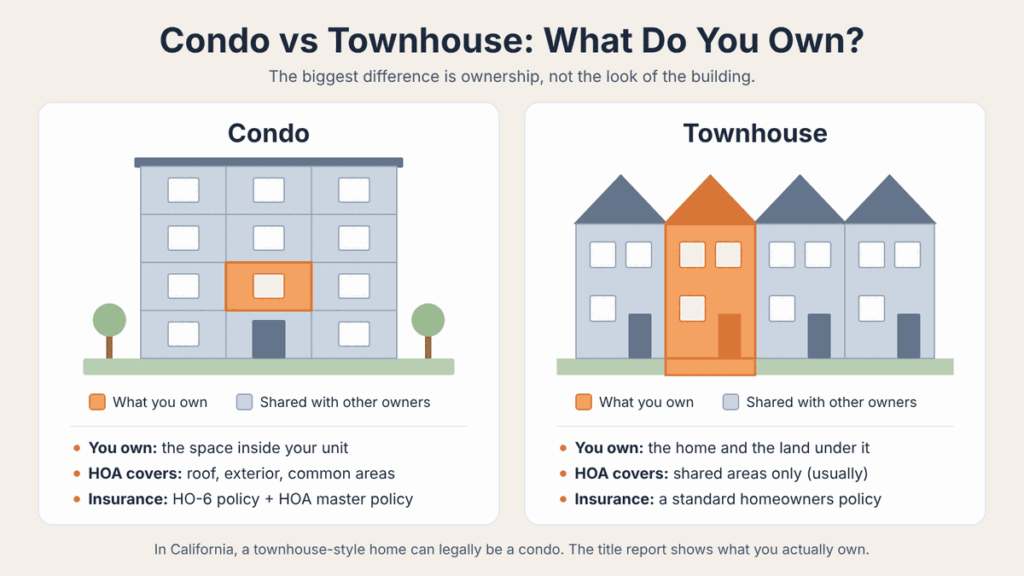
Is a Townhouse a Condo? The “Townhouse Condo” Explained
Sometimes, yes. “Townhouse” describes how a home looks. “Condo” describes how it is owned. So a home can look like a townhouse but be legally set up as a condo. People often call this a “townhouse condo” or “townhome-style condo.”
In that case, you own the inside of your townhouse, but not the land under it or the roof over it. The HOA owns and looks after those, just like in a condo building.
To find out which one you are buying, do not rely on the listing photos. Check these instead:
- The title report or grant deed. This describes exactly what you are buying.
- The CC&Rs (Covenants, Conditions and Restrictions). This is the HOA’s rule book. It spells out what you own, what the HOA maintains and what you are allowed to change.
- The property type on the listing. Listings can be wrong, so confirm it with the documents above.
This matters because it changes your insurance, your loan options and who pays when the roof needs work.
Townhouse vs Condo HOA Fees: What They Cover
An HOA collects monthly dues from every owner and uses that money to run and repair the shared parts of the community. How much you pay depends mostly on how much the HOA takes care of.
- Condo HOA dues tend to be higher. They usually cover the roof, outside walls, landscaping, the building’s insurance and amenities like a pool or gym.
- Townhouse HOA dues tend to be lower. Owners often handle their own roof and exterior, and the HOA covers only the shared spaces.
Two more costs are worth knowing about:
- Special assessments. If the HOA has not saved enough for a big repair, it can charge every owner a one-time fee. For example, if a 40-unit complex needs a $200,000 roof and has only $120,000 saved, each owner may be asked to pay $2,000 to cover the gap.
- Reserves. These are the savings an HOA keeps for future repairs. In California, an HOA must have its major components inspected for a reserve study at least once every three years and review that study every year. Healthy reserves usually mean fewer surprise bills.
Insurance: HOA Master Policy vs HO-6
Insurance is one of the most overlooked differences between the two.
Condo: The HOA carries a master policy. It usually covers the building structure, such as the roof and outside walls, plus the common areas. You then buy your own condo policy, called an HO-6. It usually covers:
- The inside of your unit, like flooring, cabinets and upgrades
- Your belongings
- Your liability if someone is hurt inside your unit
- Loss assessment coverage, if you add it. This helps pay your share when the HOA charges owners for a covered loss that the master policy does not fully pay.
Townhouse: If you own the structure, you usually need a standard homeowners policy that covers the whole home, not just the inside.
Either way, read the insurance section of the CC&Rs. Then ask your insurance agent exactly where the HOA’s coverage stops and yours begins.
Which Is Cheaper, a Condo or a Townhouse?
Condos usually cost less to buy. Here is what recent sales show:
| Market (August 2026) | Condo median price | Single-family median price |
|---|---|---|
| United States | $371,600 | $434,800 |
| California | $640,000 (condos and townhomes) | $901,420 |
The national figures come from the National Association of REALTORS® and the California figures from the California Association of REALTORS®. Neither report lists townhouses on their own, so treat them as a general guide.
Keep in mind that a lower price does not always mean a lower monthly cost. Your monthly cost is your mortgage payment plus HOA dues plus insurance. For example, a condo with $450 a month in dues can end up costing more each month than a pricier townhouse with $150 in dues.
Financing a Condo vs a Townhouse (and FHA-Approved Condos)
A townhouse on its own lot is usually financed just like a single-family home.
Condos take an extra step, because the lender looks at the whole community, not just your unit. Lenders want to see that the HOA is in good financial shape, that most owners pay their dues on time, and that there are no major lawsuits.
If you plan to use an FHA loan (a government-backed loan that allows a small down payment):
- The condo project needs FHA approval, or you can request approval for just your unit.
- At least 50% of the units in the project generally must be owner-occupied.
- Single-unit approval means extra paperwork, so allow more time before closing.
Your lender can tell you whether a project is already FHA-approved. A townhouse that is legally a condo follows condo rules, which is one more reason to check the CC&Rs early. It also helps to compare first-time home buyer loans before you start touring so you know which homes you can finance.
Pros and Cons of Buying a Condo or Townhouse
Condo
Pros:
- A lower purchase price in most markets
- Less upkeep, because the HOA usually handles the outside
- Shared amenities like a pool, gym or clubhouse
Cons:
- Higher HOA dues
- Neighbors can be above and below you, which can mean more noise
- Stricter rules on renting, pets and changes
- Financing can take extra steps
Townhouse
Pros:
- More privacy, with no one living above or below you
- You often own the land and may have a small yard
- More control over your home
- Usually financed like a regular house
Cons:
- Usually a higher price than a comparable condo
- You may pay for your own roof and exterior repairs
- You still pay HOA dues and follow HOA rules
- Living on two or more floors means stairs every day
Condo or Townhouse in Bakersfield: Which Fits You?
Bakersfield gives buyers more choice than most of California. In August 2026, the median single-family home in Kern County sold for $400,500. That is well below California’s median for condos and townhomes ($640,000). So here, a condo or townhouse is usually a lifestyle choice, not the only way to afford a home.
A condo may fit you if:
- You want very little upkeep
- You travel often, and like a home, you can lock and leave
- You would use a shared pool or gym
A townhouse may fit you if:
- You want more privacy and a bit of outdoor space
- You plan to stay for many years
- You want more say over repairs and changes
Before you decide, it is also worth comparing both with single-family homes in the same price range.
What to Look for When Buying a Condo or Townhouse
In California, the seller must give you a set of HOA documents before the sale. Read them closely. The package includes:
- The governing documents, including the CC&Rs
- The HOA’s annual budget report
- A written statement of current dues, any special assessments, and any unpaid fees on the home
- Any open notices of rule violations
- Any rules that limit renting the home out
- Board meeting minutes from the past 12 months, if you ask for them
Questions to ask the HOA before you commit:
- Are any dues increases or special assessments planned?
- When was the last reserve study done, and how well funded are the reserves?
- Is the HOA involved in any lawsuits?
- Is the community FHA-approved?
As with any home, get a professional inspection too. A home inspection checklist helps you know what to watch for, especially the roof and air conditioning, which may be your responsibility in a townhouse.
Frequently Asked Questions
Is it better to live in a condo or a townhouse?
Neither one is better for everyone. A condo usually suits people who want low upkeep and a lower price. A townhouse usually suits people who want more privacy, a little outdoor space and more control over their home.
Is a condo a good investment?
It can be, but it depends on the community. Condo values are affected by the HOA’s finances, dues increases, rental rules and how well the property is kept up. Review the HOA documents and ask a local agent about recent sales in that community before you buy.
What is the difference between a condo, an apartment, and a townhouse?
An apartment is usually rented, and one owner owns the whole building. A condo can look the same, but each unit has its own owner. A townhouse is a home with two or more floors that shares side walls, and it usually comes with the land under it.
Thinking About a Condo or Townhouse in Bakersfield?
Not sure whether a listing is a condo or a townhouse on paper? The team at Lockhart Real Estate Advisors can pull the property details, walk you through the HOA documents, and help you compare your options. Call 661-735-1887 or send us a message.